Difference Between Digital Printing and Offset Printing
Have you ever wondered why some printing jobs can be completed within a few hours, while others take more time to prepare? The difference often comes down to the printing method being used. Whether you need visiting cards for your business, flyers for an advertisement, brochures for customers, or printed material for product packaging, choosing the right printing method matters.
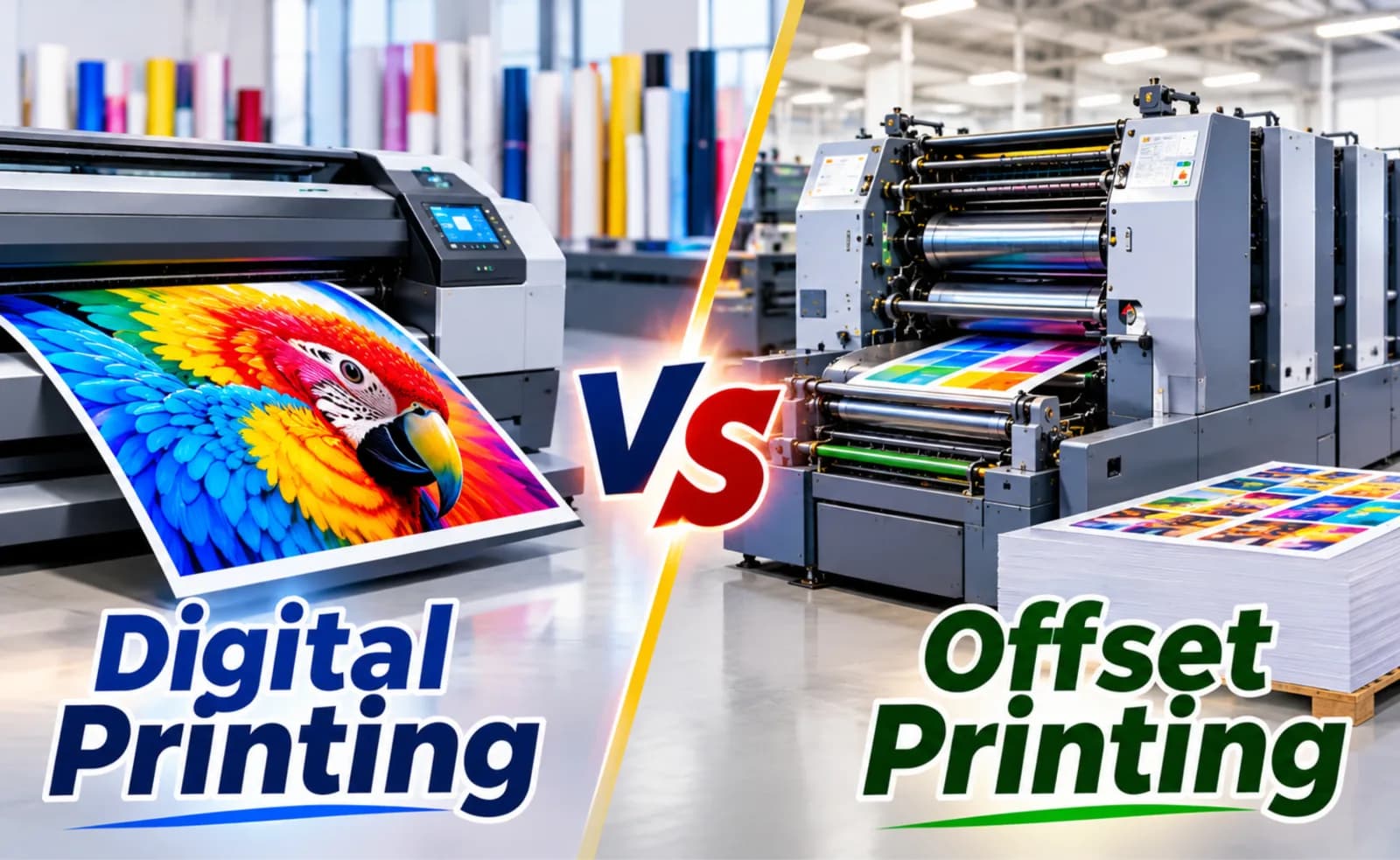
Digital printing and offset printing are two popular options used by printing companies. Both can produce good-quality prints, but the way they work, their costs, and their ideal uses are quite different. Let's understand how these two methods work and which one might be better for your printing needs.
What Is Digital Printing?
Digital printing is one of the simplest ways to get your designs printed. In this method, the design is sent directly from a computer to a printing machine. There is no need to prepare separate printing plates before the work begins. For example, if you need 100 visiting cards for your shop, the printer can take your design file and start printing without going through a lengthy setup process. This makes digital printing a convenient option for people who need fewer copies or want their work completed quickly.
You will commonly find digital printing used for:
- Business cards and visiting cards
- Flyers and pamphlets
- Posters and banners
- Wedding and invitation cards
- Product labels and stickers
- Small batches of brochures
- Certificates and personalised documents
Another useful thing about digital printing is that you can make changes to your design whenever needed. You don't have to prepare new printing plates every time you update something.
What Is Offset Printing?
Offset printing is a different process. Instead of printing directly from a computer file, it uses specially prepared plates to transfer ink onto paper. The design is first transferred onto a metal plate. The plate then transfers the ink to a rubber blanket, which finally puts the image onto the paper. This process involves some preparation before the actual printing starts. However, once everything is set up, the machine can produce thousands of copies with consistent results.
Offset printing is commonly used for:
- Newspapers and magazines
- Books and catalogues
- Company brochures
- Product packaging
- Calendars
- Corporate stationery
- Large batches of flyers and pamphlets
The initial setup may cost more, but the price per copy usually comes down when you print in large quantities. That's why many businesses prefer this method for bulk printing.
Digital Printing vs Offset Printing: What Are the Main Differences?
At first glance, both methods may seem similar because they produce printed materials. However, there are several differences worth understanding before placing an order. Let's look at them one by one.
1. Difference in the Printing Process
The main difference is the way the design reaches the paper. With digital printing, you simply provide the printer with your design file. The machine reads the file and prints it directly onto the selected material. Offset printing involves an extra step. Printing plates need to be prepared before the machine can start producing copies. If you need a small number of prints, digital printing is generally easier to arrange. For larger orders, the additional setup involved in offset printing can be worthwhile.
2. Difference in Printing Cost
Your printing budget is often one of the first things to consider. Digital printing usually costs less to start because there are no plate-making expenses. This makes it a good choice when you only need a limited number of copies. Offset printing has a higher initial cost because of the preparation involved. However, the cost of each copy becomes lower as the order quantity increases.
For example, if you need 100 visiting cards, digital printing may be the more affordable option. But if you want 10,000 brochures for a marketing campaign, offset printing could offer better value. The final price also depends on paper quality, size, colours, finishing, and the printing company.
3. Difference in Print Quality
Both methods can produce attractive and professional-looking prints. The results depend on the printing machine, paper, ink, and quality of the original design. Digital printing is suitable for everyday requirements such as business cards, posters, flyers, and brochures. It can produce clear text, sharp images, and good colour results.
Offset printing is often preferred for large projects where the same colours and appearance need to be maintained across thousands of copies. It also supports special ink requirements, such as Pantone colours, which can be useful when a business wants its branding colours to remain consistent.
4. Difference in Printing Time
Imagine that you suddenly need 200 flyers for an upcoming shop promotion. You probably wouldn't want to wait several days just for printing. This is where digital printing can be helpful. Since there is no plate preparation, the printing process can begin quickly once the design is approved.
Offset printing takes more time at the beginning because the plates and machine settings need to be prepared. However, after everything is ready, large orders can be printed efficiently. So, if you are working with a short deadline and need fewer copies, digital printing is generally more convenient.
5. Difference in Customisation
Sometimes, you may want every printed copy to contain different information. For instance, invitation cards may have different names, or business documents may include individual customer details. Digital printing makes such changes easier. It allows different versions of a design to be printed without preparing new plates for every variation. Offset printing is generally better when you want the same design on every copy. Making changes during the printing process can involve additional preparation and expense.
6. Difference in Order Quantity
The number of copies you need also plays an important role in choosing between these methods. Digital printing works well when you need a few copies or a small batch. You can order according to your requirements instead of printing thousands of pieces.
Offset printing makes more financial sense when you need a large quantity of the same material. The setup cost is divided across more copies, which helps bring down the individual printing price. If you regularly print brochures, catalogues, or promotional materials in bulk, offset printing is worth considering.
Comparison Table: Digital Printing vs Offset Printing
Here is a quick comparison to help you understand the differences.
Feature | Digital Printing | Offset Printing
Printing process | Prints directly from a digital file | Uses plates to transfer ink
Initial cost | Usually lower | Usually higher
Suitable quantity | Small to medium orders | Medium to large orders
Printing time | Faster for smaller jobs | Requires initial setup
Customisation | Easy to personalise | Better for identical copies
Cost per copy | May be higher for bulk orders | Usually lower for large orders
Colour results | Good, depending on equipment | Consistent across large batches
Common applications | Visiting cards, flyers, posters | Books, magazines, catalogues
What Are the Advantages of Digital Printing?
Digital printing has made it easier for small businesses and individuals to get professional printing done without placing large orders.
Here are some reasons why people choose it:
- Quick printing: You can get smaller printing jobs completed in less time because there is no plate preparation.
- Affordable for small orders: You don't have to pay for separate printing plates.
- Easy to make changes: If you want to correct a phone number, address, or design, the file can be updated before printing.
- No need for bulk orders: You can print only as many copies as you actually need.
- Personalised designs: Different names, addresses, and other details can be added to individual prints.
The only thing to keep in mind is that digital printing may become more expensive per copy when you need a very large quantity.
What Are the Advantages of Offset Printing?
Offset printing is still widely used by businesses that need a large number of printed materials.
Some of its important benefits include:
- Lower cost for bulk orders: Printing thousands of copies can be more economical with this method.
- Consistent printing: It helps maintain a similar appearance throughout a large batch.
- Colour control: It supports special colour requirements, including Pantone inks.
- Different paper choices: It can be used with various paper types and printing materials, depending on the machine.
- Suitable for large projects: It works well for magazines, books, catalogues, and commercial packaging.
However, you should remember that the initial preparation takes more time and costs more than digital printing.
When Should You Choose Digital Printing?
Digital printing is a practical option when you need a smaller quantity and don't want to spend too much time waiting for the order.
You can consider this method if:
- You need a small number of visiting cards for your shop or office.
- You want to print a few flyers for a local promotion.
- You need invitation cards with different names.
- You want posters or stickers in limited quantities.
- You need printed materials on short notice.
- You want to check a brochure design before placing a large order.
For new businesses and startups, digital printing can be particularly helpful because they may not need thousands of printed copies at once.
When Should You Choose Offset Printing?
Offset printing is a better option to consider when you already know how many copies you need and want to print them together.
It may be suitable for you if:
- You need thousands of brochures or pamphlets.
- You are planning to print books, magazines, or product catalogues.
- You require a large quantity of product packaging.
- You want the same design and colours across every copy.
- Your business regularly orders printed marketing materials.
If you have a planned advertising campaign or a large distribution requirement, getting an offset printing quotation can help you compare the overall cost.
Which Printing Method Is Better for Business Promotion?
There isn't one answer for every business. It depends on what you want to print and how many copies you need. For example, a small clothing shop may only need 200 flyers to inform nearby customers about a new collection. Digital printing would be a convenient choice for this requirement.
Now consider a company that wants 10,000 brochures to distribute at an exhibition or through its sales team. In this situation, offset printing may be more economical. The same applies to visiting cards, posters, stickers, catalogues, and other promotional materials. Your printing requirements will decide which method makes more sense.
Before choosing a printing service, think about these five things:
- Number of copies: Do you need a few prints or thousands of them?
- Available budget: How much are you comfortable spending on the complete order?
- Delivery time: Do you need the material urgently or can you wait for production?
- Design requirements: Will every copy have the same design, or do you need personalised versions?
- Printing material: What paper, thickness, or other material will suit your project?
Discussing these details with your printing service provider can help you avoid unnecessary expenses and select the right option.
Final Thoughts
Digital printing and offset printing are both useful, but they serve different purposes. If you need a few visiting cards, personalised invitations, or promotional flyers within a short time, digital printing is usually a convenient option. On the other hand, if you need thousands of brochures, magazines, catalogues, or packaging materials, offset printing may be a more economical choice.
Before placing your order, don't focus only on the printing price. Consider the quantity, quality, delivery time, and type of material you need. A little comparison beforehand can help you get the right printing solution without spending more than necessary.